
Columbia County Criminal Case Files
Columbia County criminal court records are kept through the Superior Court system when felony prosecution or other Superior criminal matters are filed. Superior Court is Georgia's general-jurisdiction trial court, with exclusive jurisdiction over felony trials. Magistrate Court may issue arrest and search warrants, and Probate or municipal courts may handle some traffic or ordinance matters, but the felony court file is a Superior Court record. The Columbia County judicial landing page routes users to Superior Court, Magistrate Court, Probate Court, Juvenile Court, the District Attorney, and the Public Defender.
The case file begins after law enforcement sends a matter for prosecution and charges are filed or reviewed. The District Attorney FAQ states that law enforcement agencies send case files to the DA, the office reviews them immediately, and then each case moves at a case-specific pace. Court dates and dockets are scheduled by Superior Court judges' offices, not by the DA. For a closer look at the charge list itself, use the court charge records after arrest context. The criminal court record is broader because it follows arraignment, motions, pleas, verdicts, disposition, and sentence.
The official District Attorney FAQ shows how prosecution questions, court notices, bond-condition changes, and bond refunds connect to the court record.
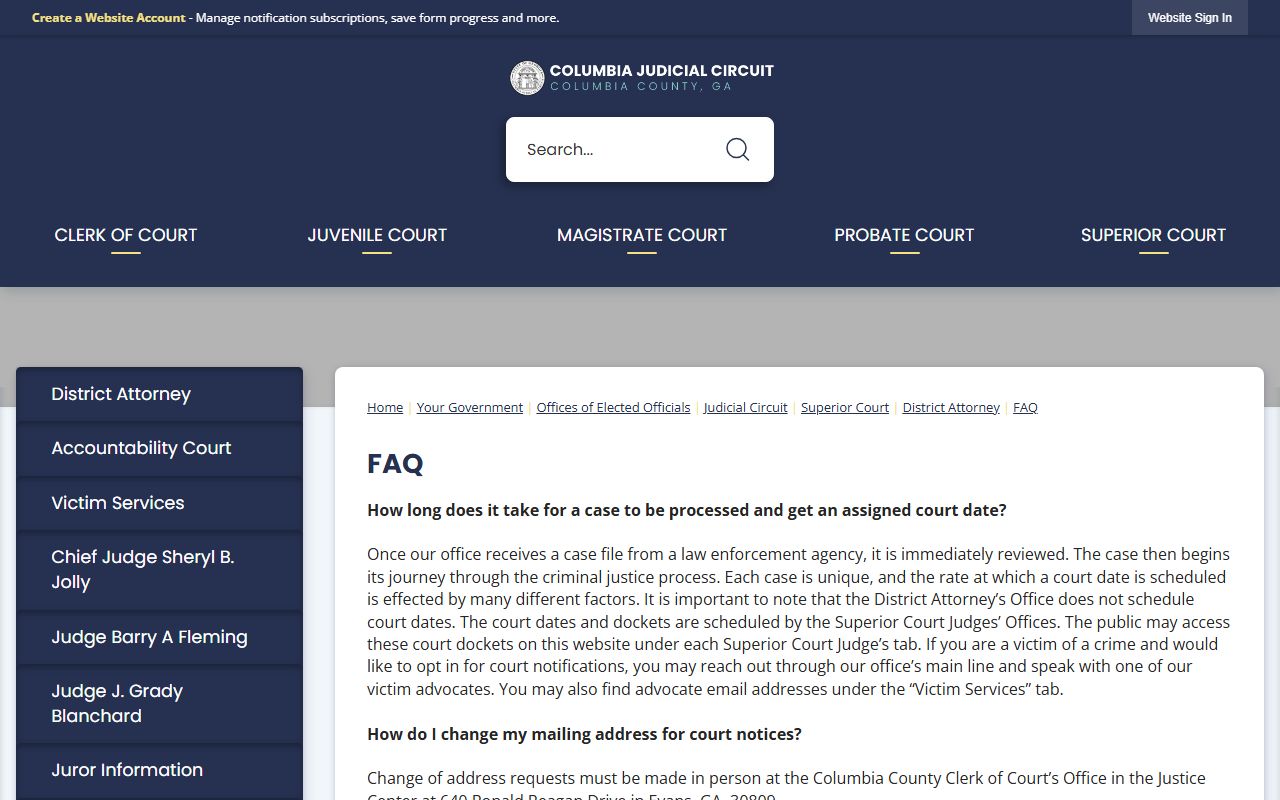
That FAQ is useful because it separates prosecution review from judge-controlled docket scheduling.
Search Columbia County Criminal Court Records
The main online route is the Clerk of Superior Court case information page and the Columbia Clerk Web Docket. Clerk Cindy Mason's office says criminal case files may be searched by case number, party name, and judge name. Criminal results can show charges associated with the case, attorneys' names, and proceeding history. The portal disclaimer says online information is not certified and should be verified through the Clerk for official use.
- Open the Clerk case-information page and follow the Web Docket link.
- Accept the disclaimer after reading the limits on online accuracy and certification.
- Search by criminal case number when it appears on a notice, indictment, subpoena, or calendar.
- Search by defendant name when the file number is unknown, then check judge or case-type clues.
- Request certified copies, eCertified documents, or non-downloadable documents from the Clerk.
State-level tools do not replace the Columbia County criminal court record. The Georgia Courts eAccess page may send users to provider websites and account-based searches. Georgia.gov record restriction material explains criminal-history restriction steps, while the Georgia Department of Corrections offender search applies after a person is in state custody, not while a county court case is being searched.
Columbia County Criminal Case Flow
A criminal court file is built as the case moves. The earliest court record may be a charging document or docket entry. Later entries may show arraignment, motions, calendar settings, plea discussions, bench trial or jury trial, disposition, and sentencing. Judge calendar pages in Columbia County show daily, criminal, bench trial, misdemeanor arraignment, felony arraignment, sentencing/status, and jury trial schedule labels.
Case flow: Charges Filed › Arraignment › Pretrial and Motions › Plea or Trial › Disposition › Sentencing
| Stage | What Happens |
|---|---|
| Charges filed | The prosecutor files or reviews the formal accusation, information, or indictment after law enforcement referral. |
| Arraignment | The accused is advised of charges and enters a plea, often shown on judge calendars. |
| Pretrial and motions | Lawyers file requests for court action, bond changes, continuances, or evidentiary rulings. |
| Plea or trial | The case is resolved by plea, bench trial, jury trial, dismissal, or other court action. |
| Disposition and sentencing | The court records the outcome and any punishment, probation, bond release, or follow-up order. |
What Columbia County Criminal Records Show
Columbia County criminal court records should be read field by field. A charge is an accusation. A disposition is the outcome. A sentence is the punishment ordered after a conviction or plea. The Clerk's criminal search description confirms that criminal results show charges, attorneys' names, and proceeding history, while the DA FAQ adds local detail about case processing, docket scheduling, bond changes, victim notifications, and cash-bond release after sentencing.
| Field | What It Shows |
|---|---|
| Case number | The Superior Court file number used for docket searches, certified copies, and subpoenas. |
| Defendant | The person accused in the criminal case. |
| Charges | The offenses filed in court, which may later be amended, reduced, dismissed, or resolved. |
| Attorneys | Defense counsel and prosecution participation when listed in the case record. |
| Proceeding history | Hearings, motions, calendar events, orders, pleas, trials, and status entries. |
| Bond | Bond type, condition, refund, or release details when they appear in the file or related office process. |
| Disposition | The final result of a charge or case, such as guilty, dismissed, acquitted, or nolle prosequi. |
| Sentence | Jail, prison, probation, fine, program, or other punishment ordered by the judge. |
Columbia County DA and Defense Access
The District Attorney page sits within the Columbia Judicial Circuit. The county directory lists the DA office at 7045 Evans Town Center Boulevard, Evans, with phone 706-447-6780. Victims may use the DA main line and victim advocates for court notifications. The FAQ says final cash-bond refund paperwork after sentencing is generated by the DA and forwarded to the Sheriff's Office, and that process may take up to two weeks.
The county directory page for the District Attorney provides the official local contact block for prosecution questions.
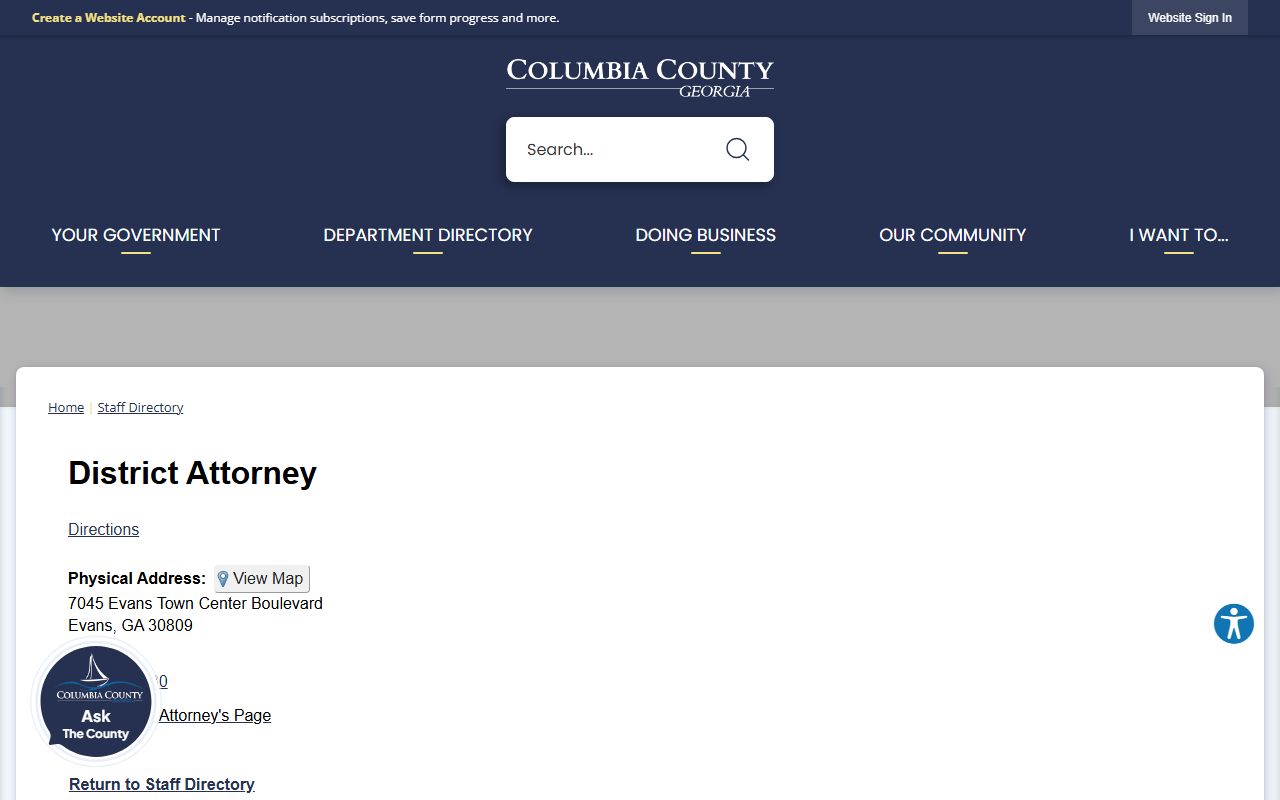
Use that office for prosecution-side routing, not for changing a judge's court date.
The official District Attorney page identifies the local prosecution office inside the Columbia Judicial Circuit.
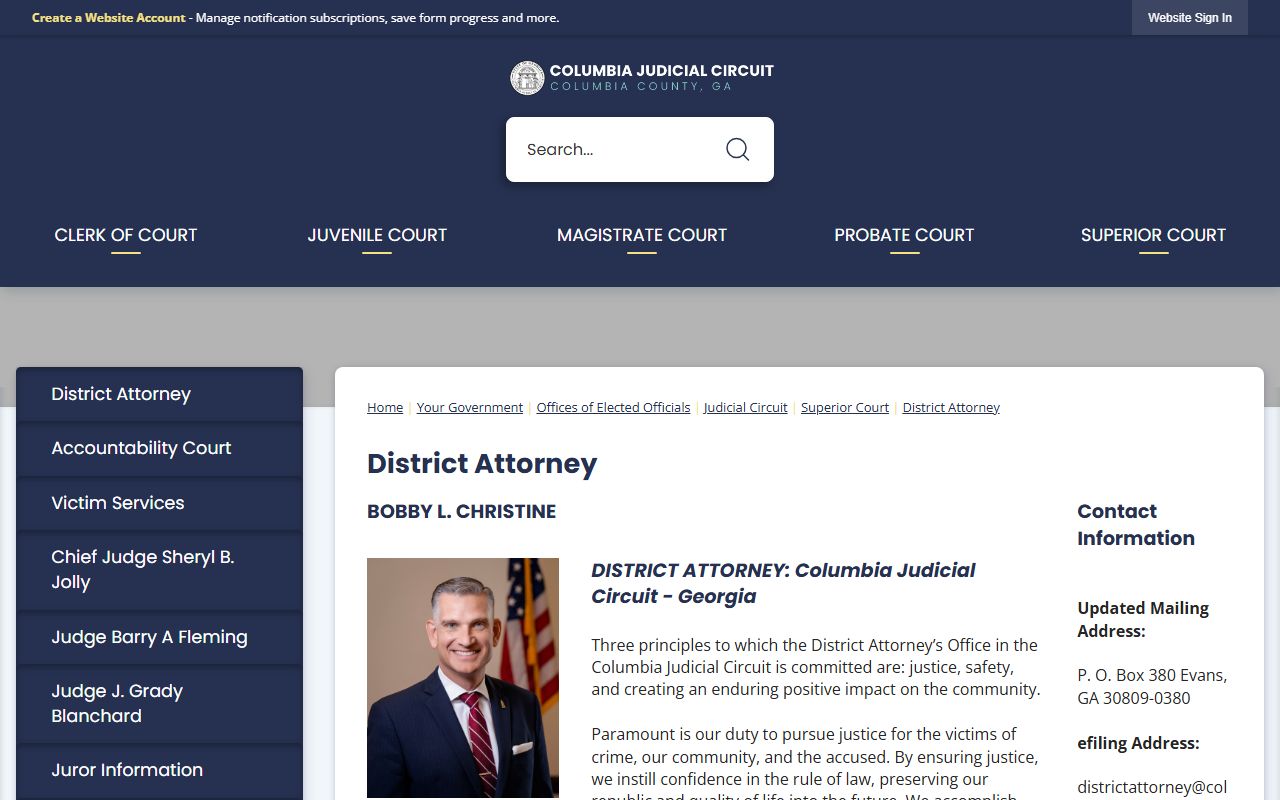
Criminal case scheduling still belongs to Superior Court judges' offices and the court docket.
The local Public Defender Services page gives the defense-side access point for eligible defendants.
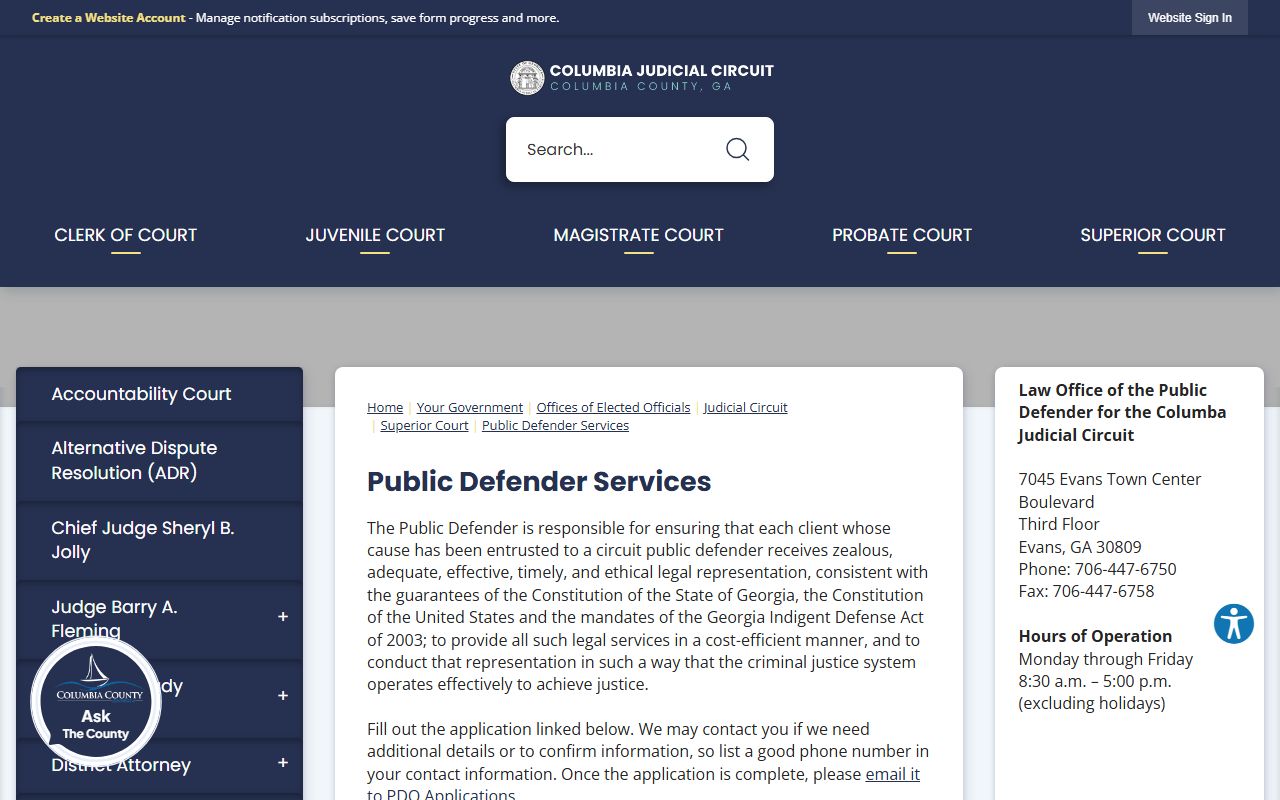
Public defender contact is separate from the public search process, but it can affect how defendants receive case help.
The Georgia Public Defender Council Columbia Circuit page names Circuit Public Defender Mack Taylor and lists the Columbia Circuit office.
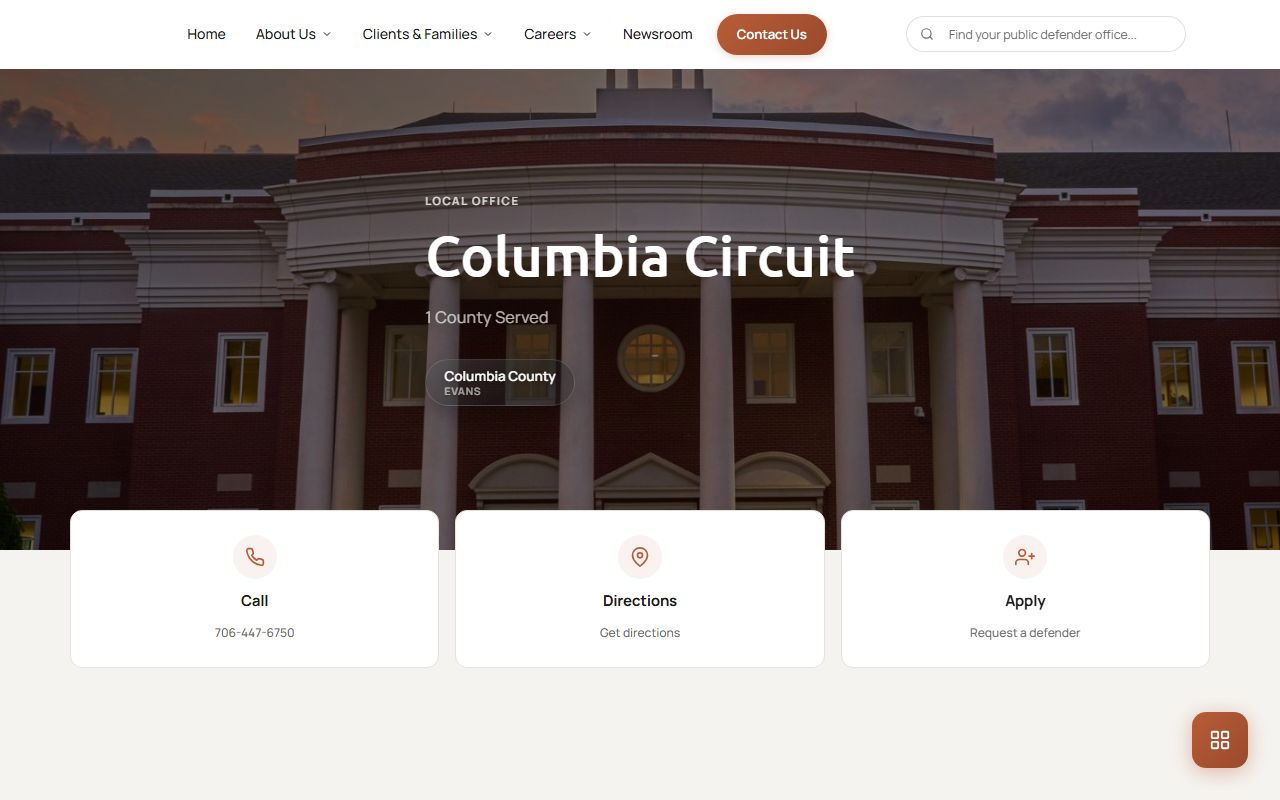
That state office listing confirms the circuit-level defense structure serving Columbia County.
Criminal Charges vs Convictions
A Columbia County criminal court record may show both charges and the final outcome. The two are not the same. A charge is the accusation filed or maintained by the prosecutor. A conviction is a final result after a guilty plea, verdict, or other conviction event. Charges can be dropped, dismissed, amended, reduced, or resolved without conviction, so the disposition field must be read before drawing a conclusion.
| Charge | Conviction | |
|---|---|---|
| Meaning | An accusation filed in court. | A final guilty result by plea or verdict. |
| Timing | Early or mid-case. | At disposition or sentencing. |
| Record effect | May remain visible even if later dismissed unless restricted. | May lead to sentence, probation, custody, or fines. |
| How to verify | Read charge status and proceeding history. | Read disposition, sentence, and final order. |
Restricted Columbia County Criminal Records
Georgia uses the term record restriction for many criminal-history access limits. The Georgia.gov restriction process page explains that pre-July 1, 2013 arrests generally route through the arresting agency, while later arrests route through the prosecuting attorney. In Superior Court felony matters, that may mean the Columbia County District Attorney. If a motion or court order is needed, it must be filed in the court that handled the case.
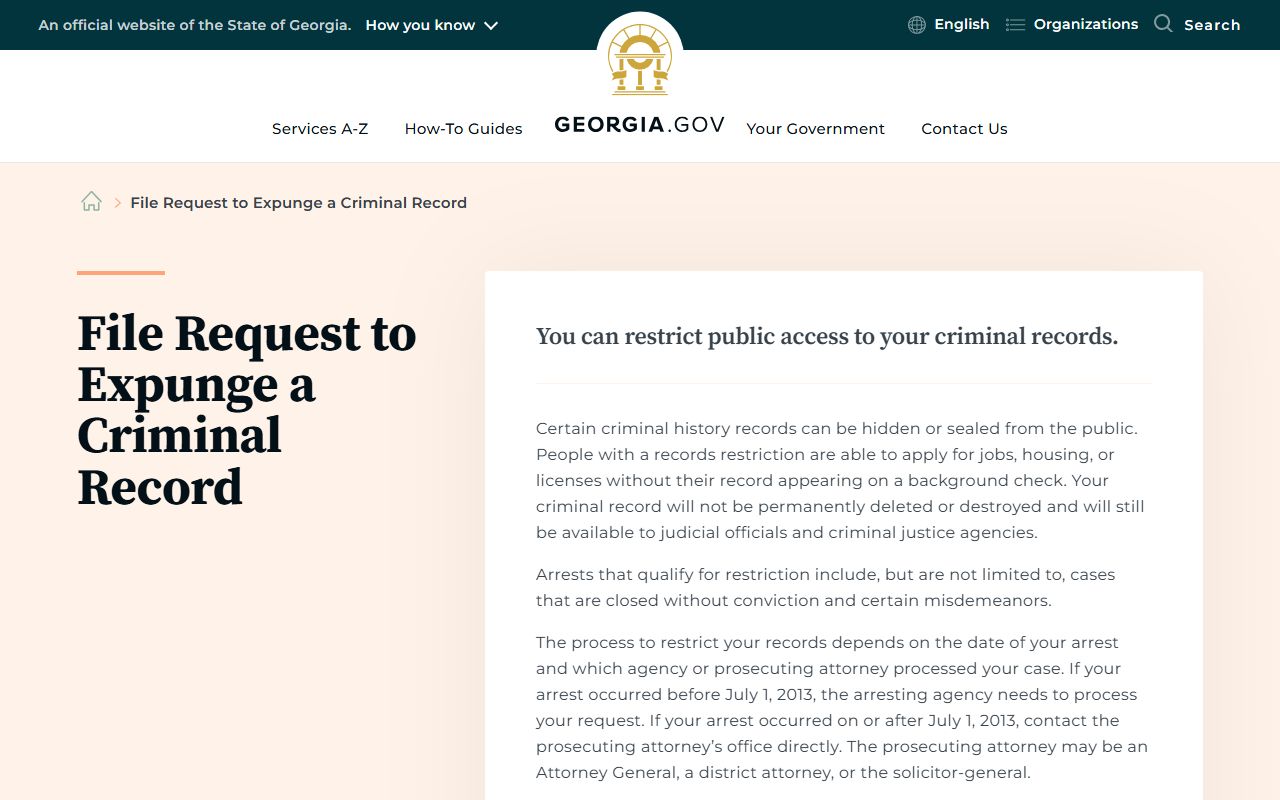
The state restriction process matters because restricted records are not destroyed, but public access is limited.
| Restricted or Sealed | Expunged | |
|---|---|---|
| Georgia wording | Record restriction is the common state term for limiting public access. | Traditional destruction-style expungement is not the normal Georgia term for many cases. |
| Public view | Hidden or limited for eligible records by statute or court order. | Do not assume deletion unless a specific law or order says so. |
| Officials | Law enforcement and judicial officials may still have access. | Access depends on the actual order and record type. |
| Local route | Use arresting agency, prosecutor, or court depending on arrest date and outcome. | Confirm through Georgia.gov and the court that handled the case. |
Important: Juvenile criminal matters, sealed warrants, adoption references, mental-health files, and victim details may be withheld or redacted.
Public Access to Columbia County Criminal Records
Georgia's Open Records Act supports public access unless an exemption applies, and O.C.G.A. 50-18-71 covers timing and lawful copy costs for public records. Court records still require court routing. The county Public Records Center says not to submit court-related records through that portal. Superior Court criminal records go to the Clerk of Superior Court, while Sheriff records may use the Public Records Center through Sheriff Clay N. Whittle's office when the request is for a law-enforcement record rather than the court case file.
For certified criminal court records, contact the Clerk of Superior Court at 706-312-7139 or clerkinfo@columbia.gsccca.org. The Evans office is at 640 Ronald Reagan Drive and is open 9:00 a.m. to 5:00 p.m. Monday through Friday except holidays. The Clerk also has an Appling courthouse satellite at 1958 Appling-Harlem Hwy. on Tuesdays from 9:00 a.m. to 4:00 p.m. except holidays.
Magistrate, Probate, and Juvenile fallbacks should not be overlooked. Magistrate Court issues criminal arrest and search warrants, so a warrant origin may appear there before or alongside a Superior Court criminal case. Probate Court controls county and state traffic citation records, which can matter when a traffic offense later connects to a criminal allegation. Juvenile Court handles youth delinquency and juvenile traffic at 7045 Evans Town Center Boulevard, with restricted access rules that differ from adult Superior Court files.
Background checks need a separate caution. A public court search can help a person understand an open case, but it is not a consumer report. Employment, housing, credit, insurance, and other FCRA-regulated decisions require legally compliant sources and procedures. When the question is the exact legal status of a Columbia County criminal court record, the safest source is the certified court file, the final disposition, and the sentence or order entered by the judge.