
Columbia County Arrest Records and Charges
Columbia County arrest records begin with law enforcement activity. The Sheriff's Office is led by Sheriff Clay N. Whittle, and the Detention Center is the official current custody inquiry point when a person needs jail status. The sheriff inmate inquiry page says the current online custody list is no longer available on the sheriff website and directs users to visit the Detention Center at 2273 County Camp Road in Appling or call 706-541-0754. Police-to-Citizen routes exist for inmate and wanted-person data, but current custody should be confirmed with the Detention Center.
Court charges after arrest are different. Once law enforcement sends a case file to the District Attorney, the prosecutor reviews it and the case moves through the criminal justice process. The formal charge record is tracked in court through the Clerk of Superior Court case search for Superior Court criminal matters. The full case file and outcome are covered in Columbia County criminal court records; the arrest or jail side is closer to custody and booking records.
Find Columbia County Arrest Records
Use the right source for the question being asked. If the question is whether a person is currently in custody, contact the Columbia County Detention Center. If the question is what charges were filed in court, use the Clerk of Superior Court case-information page and the Columbia Clerk Web Docket. The Clerk says criminal searches may show charges associated with the case, attorneys' names, and proceeding history. If the question is whether a person moved into state custody after sentence, use Georgia Department of Corrections tools instead of county jail tools.
- For current jail status, call or visit the Columbia County Detention Center because the sheriff site no longer publishes a current custody list.
- For charges filed in Superior Court, open the Clerk case-information page and enter the Web Docket.
- Search by defendant name or case number, then read each charge and the proceeding history.
- Check whether the charge was amended, reduced, dismissed, placed in nolle prosequi status, or resolved by plea or trial.
- Use the District Attorney or court that handled the case when record restriction or charge status requires official action.
The Georgia offender search overview is a state-level route for people in Department of Corrections custody, not for fresh Columbia County arrest records.
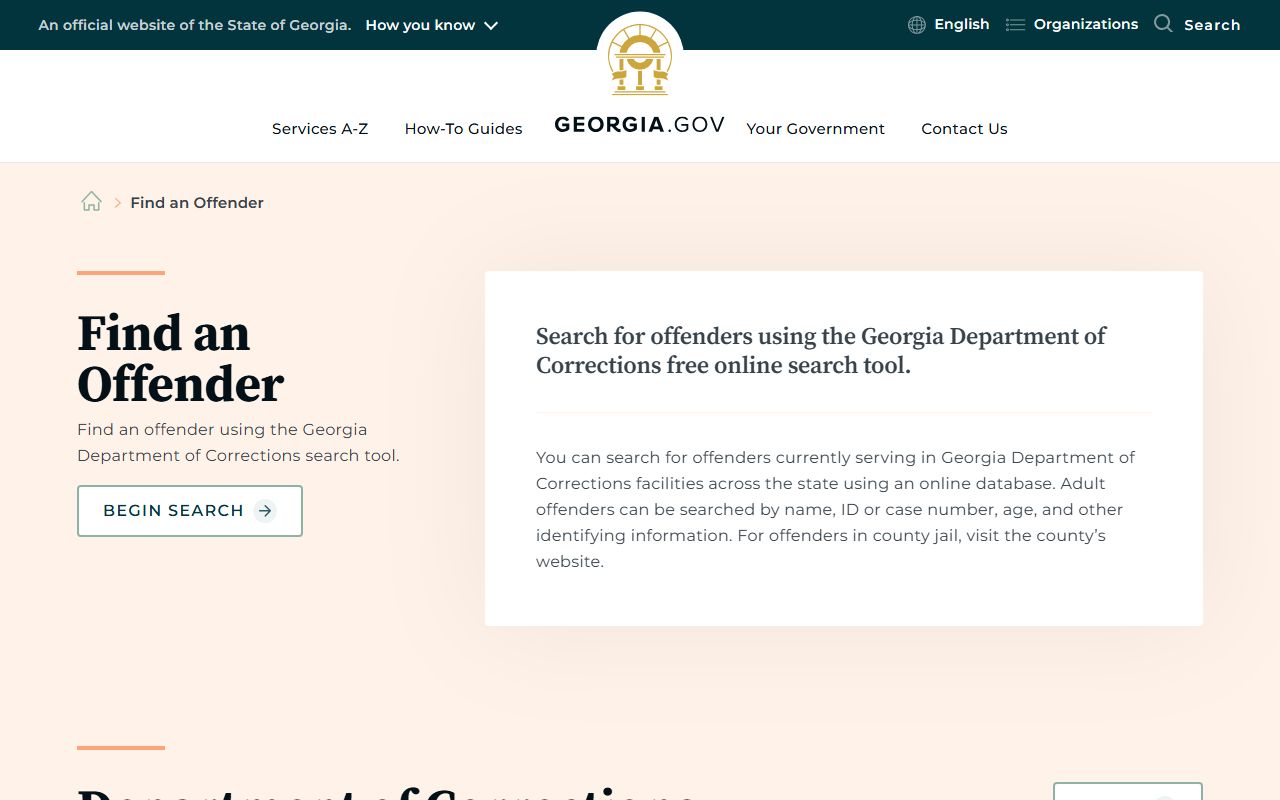
That distinction keeps a county arrest inquiry separate from a later state prison search.
Court Charges After Arrest
Charges after arrest reach the court through a charging document. The research file names indictment and accusation terms in the court-record glossary, and Georgia criminal practice commonly distinguishes prosecutor-filed accusations from grand-jury indictments. A complaint or warrant-related filing may start the lower-court side, while Superior Court felony prosecution may proceed through accusation or indictment. One arrest can lead to more than one charge, and a later court record may not match the first booking description exactly.
| Document Type | Who Uses It | What It Does |
|---|---|---|
| Complaint | Officer, complainant, or prosecutor route depending on matter | Starts or supports an accusation in a warrant, magistrate, ordinance, or early criminal process. |
| Accusation | Prosecutor | Files formal charges without grand-jury indictment where Georgia law permits. |
| Indictment | Grand jury | Charges felony offenses through a grand-jury document used in Superior Court. |
Columbia County Charge Status
A charge field should always be read with status and disposition. The first charge after arrest is not the final result. Prosecutors may review the law enforcement file, add or remove counts, amend wording, reduce severity, dismiss a count, or enter nolle prosequi. A judge may also rule on motions that affect what remains in the case. The Clerk docket and Superior Court judge calendars can show how the case moved after filing.
| Status | What It Means |
|---|---|
| Pending | The charge has been filed or remains active, with no final outcome shown yet. |
| Amended | The prosecutor or court changed the charge wording, count, or cited offense. |
| Reduced | The charge changed to a less severe offense or lower-level count. |
| Dismissed | The court record shows the charge did not proceed to conviction. |
| Nolle prosequi | The prosecutor declined to continue that charge, subject to the court record and case context. |
| Disposed | The charge has a recorded outcome, such as plea, verdict, dismissal, or sentence. |
Sheriff Records vs Court Charge Records
Law enforcement data and court charge records can overlap but do not serve the same purpose. A sheriff or jail record may include arrest date, holding facility, booking agency, primary charge, bond fields, release date, and custody notes. The Police-to-Citizen inmate client model exposes fields such as full name, age, race, sex, height, weight, arrest date, release date, court date, total bond, booking agency, arresting agency, holding facility, primary charge, charge status, docket number, bond type, bond status, and bond amount when enabled.
A court charge record follows the accusation in court. It may show charge list, attorneys, proceeding history, motions, hearings, plea, disposition, and sentence. The county Public Records Center can be used for certain Sheriff's Office records, processed under Major Andy Shedd during weekday business hours, but the county routing page says court-related records must go to the court office that keeps them. That means Superior Court charges through the Clerk, traffic through Probate or the issuing municipal court, and juvenile matters through Juvenile Court under access limits.
Charge vs Conviction in Columbia County
Arrest records and court charges can appear before the court reaches a final result. A charge is not proof that a person was convicted. It is an accusation tied to a statute, ordinance, warrant, or charging document. A conviction comes after a guilty plea, verdict, or other court action that finds guilt. Read the disposition and sentence before treating a charge as an outcome.
| Charge | Conviction | |
|---|---|---|
| Point in time | After arrest or prosecutor filing. | At final plea, verdict, or judgment. |
| Meaning | A formal accusation in the court or law-enforcement record. | A finding or admission of guilt. |
| Can change | Yes, it may be amended, reduced, dropped, or dismissed. | Changes only through later court action, appeal, or post-case relief. |
| Where to verify | Clerk Web Docket, charge list, and proceeding history. | Disposition, sentence, final order, and certified case file. |
Statewide Arrest and Charge Lookups
Statewide systems can supplement Columbia County arrest records, but each has a narrow use. The GBI sex offender registry service page explains the state registry process for registered sex-offender information.
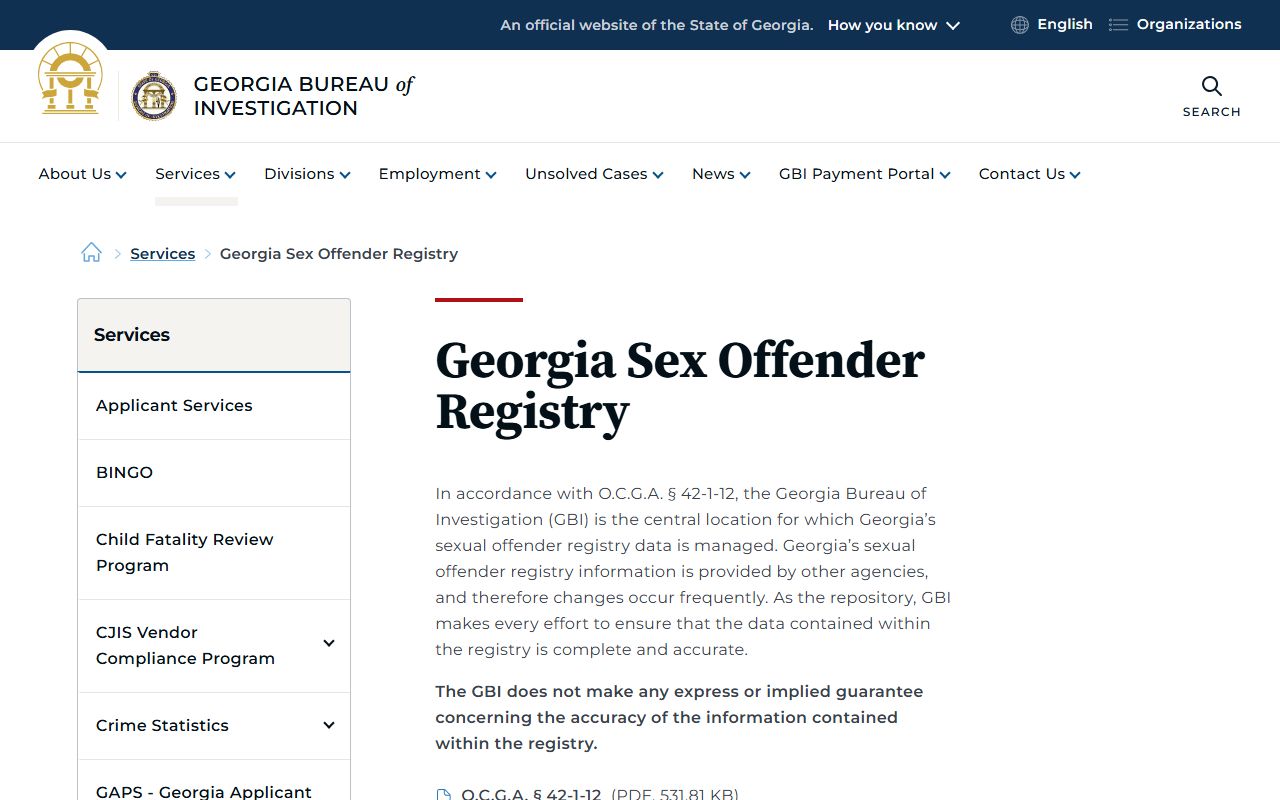
Registry information is not a substitute for the criminal court case file or the arrest record.
The public Georgia Sex Offender Registry search portal is another official state source tied to registration status.
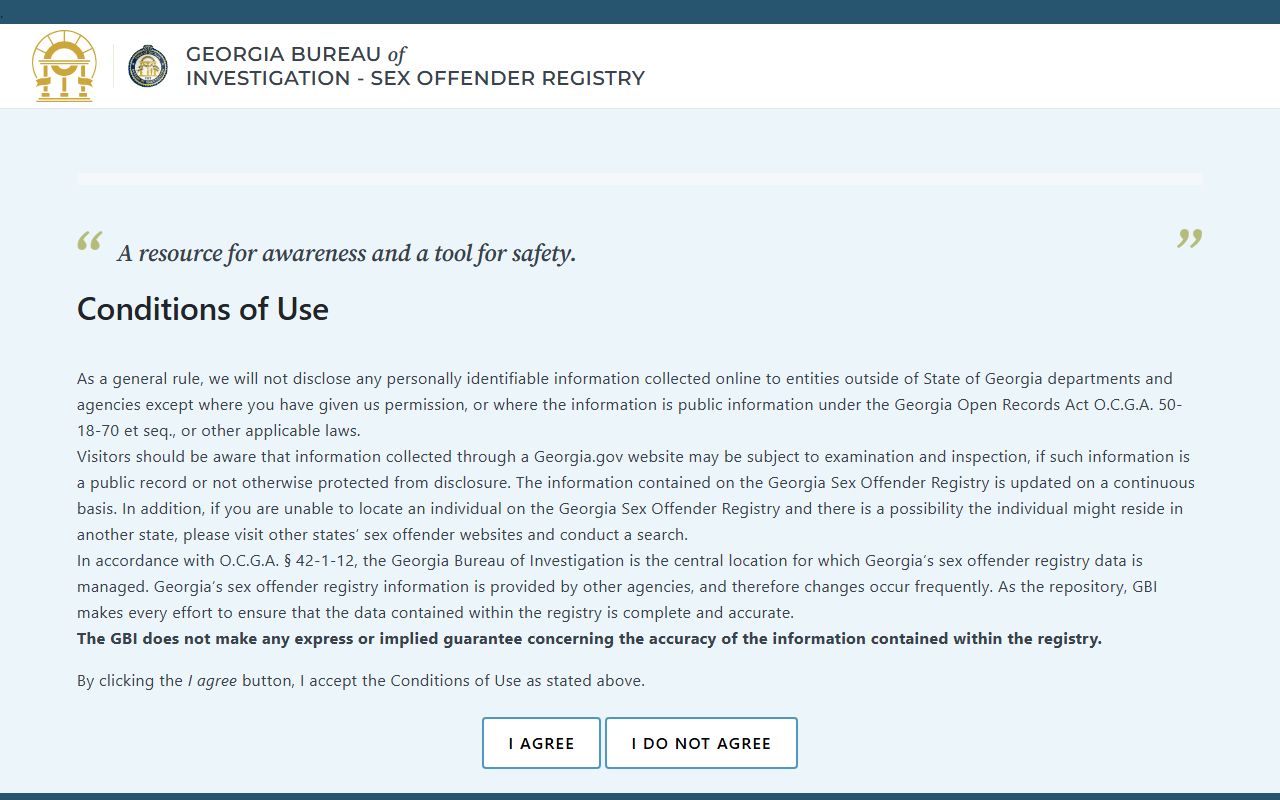
Use it only for registry searches, then verify case history through Columbia County court records when the court outcome matters.
Georgia VINE can provide custody status and criminal-case notifications, and GDC offender search applies after transfer to state custody. Neither is a county charge docket. For current Columbia County custody, the Detention Center remains the official confirmation path.
Restricted Arrest Records and Charges
Georgia record restriction is the key access limit for many arrest and charge records. The process depends on arrest date and prosecuting agency. Arrests before July 1, 2013 generally route through the arresting agency, such as the Columbia County Sheriff's Office or a municipal police agency. Arrests on or after that date generally route through the prosecuting attorney, such as the Columbia County District Attorney for felony Superior Court matters. If a motion or order is needed under O.C.G.A. 35-3-37, it belongs in the court that handled the case.
Restriction is not deletion. Public access may be limited while courts, law enforcement, and other authorized officials may still see the record. An active warrant may affect eligibility. Juvenile charges, sealed warrants, mental-health records, minor identifiers, SSNs, financial account numbers, health information, and sensitive victim details may be withheld or redacted. The county's Public Records Center limitation also matters: do not send court-charge restriction requests to the general county portal when the court or prosecutor controls the record.
The first practical step is to identify the arrest date, arresting agency, charge outcome, and court that handled the case. If the arrest was before July 1, 2013, the request generally starts with the arresting agency. If it was on or after that date, the request generally starts with the prosecutor. In Columbia County felony matters, that often means the District Attorney. If a judge must decide eligibility or public-interest factors, the filing belongs in the court record, not in a sheriff booking search.
Important: Do not treat a booking charge, wanted-person entry, or registry result as a certified court disposition.
Columbia County Arrest Charge Contacts
Use the office that owns the record. The Clerk of Superior Court handles Superior Court criminal case records, certified copies, and eCertification questions. The District Attorney reviews prosecution matters and victim notifications. The Public Defender handles eligible defense representation. The Sheriff's Office and Detention Center handle custody and sheriff records, while Magistrate Court handles arrest and search warrants.
Magistrate Court can matter even when the later case is in Superior Court because it issues criminal arrest and search warrants. Probate Court can matter when a traffic citation was issued by the Sheriff's Office, Georgia State Patrol, Department of Motor Carrier Compliance, or Department of Natural Resources. Juvenile Court can matter when the accused is a minor. Each of those paths can create a record that looks like a charge record, but the official copy and access rule come from the court that owns the file.
Clerk of Superior Court
640 Ronald Reagan Drive
Evans, GA 30809
706-312-7139
clerkinfo@columbia.gsccca.org
District Attorney
7045 Evans Town Center Boulevard
Evans, GA 30809
706-447-6780
Felony prosecution and victim services.
Sheriff and Detention Center
2273 County Camp Road
Appling, GA 30802
706-541-0754
Current custody inquiry and jail status.